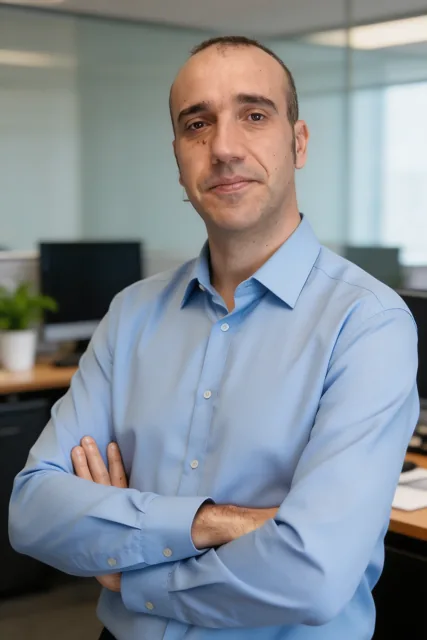

According to the CEO of SEOZoom, “AI hasn’t invented anything: fan-out is just a trendy name for what we’ve been doing for a decade”
Welcome to the fifth episode of SEO Confidential. If you missed the fourth episode with Elisa Paesante, go catch up on it — you won’t regret it, trust me!
My mission, in this space, is not to sell you easy solutions to complex problems, but to give you critical tools, food for thought and different points of view from authoritative experts in the SEO world, to help you better understand the landscape we move in: as with a puzzle, the more pieces you put together, the sharper the overall picture becomes.
The epicenter of the earthquake, as you know, is AI Mode and AI Overviews. A revolution that is rewriting the very meaning of “online visibility”.
But every great change carries an even bigger question with it:
where are the opportunities hiding that others, too busy complaining, fail to see?
To answer that, I didn’t call up a commentator. I called a builder. Someone who, while others talk about waves, designs the tools to explore the depths.
Joining us today is Ivano Di Biasi, the founder of SEOZoom:
an all-Italian SEO analysis platform that lets you monitor, analyze and optimize how websites rank on Google.
SEOZoom collects data, processes it and makes it immediately usable for concrete decisions: from competitor analysis to keyword research, from editorial suggestions to evaluating content performance.
In this interview I talked with Ivano about today’s hottest and most pressing topics, putting to him the most frequent doubts about the SEO world — the ones you surely have too:
how do you monetize a simple mention? Is Brand really the new Grail? And the keyword… is it going extinct, or has it just put on a disguise?
His answers were not comforting or reassuring. They were lucid.
Ivano put a clear, data-backed vision on the table, along with an honest reading of what lies ahead, in his opinion. He was direct and concrete. And these days, believe me, that’s no small thing.
Here are his words.
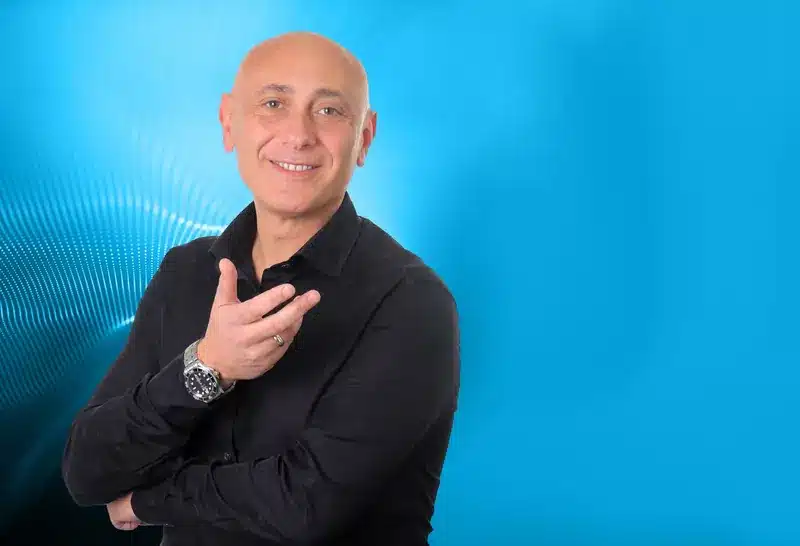
Ivano Di Biasi: “They didn’t manage to kill SEO, now they’re trying with keywords”
AI Overviews (AIOs) are reducing organic traffic, especially informational traffic (or so it would seem). Is this the beginning of a zero-click era, or is reality more nuanced?
The reality is exactly as you described it, but you have to look closely at the historical moment. Google was forced to rush out AI features so as not to let OpenAI gain ground in search. Better to let the world, and its users, know that you’re on top of things — even doing some damage left and right — than to stand still and leave room for competitors. Today people talk about nothing but Google’s AI Mode and AI Overviews; in just a few days they managed to completely erase from every social feed the sensationalism that was swirling around SearchGPT and Perplexity. Now they’ll think about repairing the damage done to all the publishers by revising the layout of the output. I believe we’ll see many changes, and quite frequent ones too.
Google claims AIOs bring quality clicks, but studies point to a drop in CTR and conversions. Who’s right, and why isn’t Google transparent about AIO data in Search Console?
I believe something is already starting to move today when it comes to showing that data in Search Console. On this point, Paolo Calicchio of Moca has done some interesting studies that actually prove Google right. Fewer clicks, but the users who do arrive are more qualified and genuinely interested in what you have to offer, and they have a deeper, higher-quality browsing experience.
If presence in AIOs is essential, how can it be monetized without direct clicks? What concrete, measurable strategies can be used to turn AIO mentions into leads or sales?
I’ll answer very directly: Brand! The AI assistant will become our trusted friend, the one who knows everything about everyone and only gives you the best advice. And what if it frequently recommended our Brand? Would we still need clicks that much? Our Brand will have an enormously higher search volume than any keyword we used to convert on before. How do we make that happen? With a multichannel strategy centered on the Brand, one that always speaks with the same voice and authority everywhere. At SEOZoom we’ve worked hard over the past year, both on AI engines and on Brand and social signals; by the end of June we’ll have nearly finished closing the circle of multichannel presence revolving around the Brand.
Will Google, with AI Mode, become a chatbot that replaces AIOs, or will the two systems coexist? Does Google intend to turn into a chatbot, despite the denials?
I believe AI Mode will become the main search mode and will replace the traditional SERP, but in the end it’s just a matter of “Layout”: if Google wants to, it can guarantee excellent CTRs even in AI Mode. For now it links too much to itself, and reaching a direct link to our sites often takes at least 2 clicks — in short, they need to work on the frontend to ensure everyone’s satisfaction, both those who publish and those who browse.
AI Overviews takes information from the web for its answers without paying anything to those who created it — citing them, of course, but effectively diverting traffic away from websites. Should some kind of financial agreement be reached for the use of this content?
I talked about this in my book SEO for AI back in May 2024; I predicted this precise moment and unfortunately here we are. As I said in the book, I really think so — but Google could also do without it if it managed to give back traffic, the only thing that truly matters to those who publish articles. Traffic is better than a fee on content, because with visits you build your business model in whatever way you see fit: ADS, affiliations and so on…
Why should a blog owner keep creating content for Google? At least before, they had advertising and traffic. Now they risk working for Big G for free. Won’t this impoverish the web of original, critical voices?
As I said before, this is a moment of testing and transition — not just for us, above all for Google. Everything will change, because the current model isn’t even a model: it’s an accident along the way that Google will have to address, and I believe they’re losing sleep trying to get it right.
If content creators are no longer incentivized to produce content, where will AIs and LLMs get their information from? Don’t they risk receiving increasingly outdated information this way?
I think this is the most recurring question asked of people who work in SEO. My answer is that it won’t happen. It can’t, for the simple reason that an AI must not blurt out random things. Google expects from publishers everything described in EEAT — could it ever let an AI answer without drawing on the high-quality sources it itself demands? Absolutely not; otherwise it would feed it with the social posts of the entire world. I’d be curious to read those answers, it would be hilarious.
How do you win the attention of AIs and appear authoritative in their eyes? Is the famous E-E-A-T still valid? Has SEO really changed that much?
SEO hasn’t changed at all, at least for the way I work. In SEOZoom’s Editorial Assistant I built a keyword-expansion system to identify the full search intent a good 5 years ago. What happens in SEOZoom when you search for a keyword is exactly what AI Overview does today: identifying those keywords and launching N search queries in parallel before giving you the answer.
Today it’s called fan-out (expansion, fanning out and so on…), but it’s the same stuff I did 5 years ago, and the stuff my users have used to optimize their content — and they show up in AI Overview without any problem. Those who know me know I’ve been talking about these things for almost a decade, because I observe every tiny detail of Google.
Others see it as a huge novelty — fan-out is all anyone talks about! It makes me laugh, because all it takes is for the news to arrive from the USA, with a well-crafted acronym or name, and it instantly becomes trendy.
Google itself says that when we search for something it breaks the search down into N keywords — keyword, keyword, repeat after me, keyword — and yet all I see around are phrases like “the keyword is dead”. They didn’t manage to kill SEO, now they’re trying with the keyword 🙂
Brand über alles: the keyword’s comeback
So, summing up, what’s the verdict of this conversation with Ivano?
Two points emerge forcefully from our chat.
First: the brand is no longer a line item in the marketing plan. It is the plan. The goal is no longer to win a keyword, but to become the authoritative answer the AI associates with an entire need. An asset no algorithm can devalue;
The second is a confirmation: the foundations of SEO not only hold — they become the real differentiator. While the market chases empty acronyms, the game is won on a surgical understanding of search intent.
GEO, LLMO, AEO… the acronyms change, but the substance remains: it’s still SEO.
To increase your visibility in AI-generated results you need clear, authoritative, well-structured content — exactly what has been done for Google for years. But today, being findable is no longer enough.
Because whether it’s a Search Engine, AI Mode or AI Overview, the winners are those who build a presence people actively search for.
By now, Google no longer rewards technical optimization alone: it rewards brands that generate attention, that spark searches, that get cited and recognized as trustworthy. Organic visibility, branded search, authority: this is the new playing field.
The truth is simple: SEO without a brand strategy is just noise.
Now that searches start everywhere — on Google, but also on TikTok, LinkedIn, Reddit, or inside an AI Overview or ChatGPT — the winner isn’t whoever optimizes pages best, but whoever builds a solid, credible, recognizable presence.
SEO and brand are no longer separate worlds: today it’s the combination that makes the difference, because only those who bring together strategy, authority and presence get chosen by artificial intelligences and by people.
Anyone who thinks pleasing the algorithms is enough is already behind. You need to build trust, identity, memory. Because today visibility isn’t conquered: it’s earned.
See you in the next episode of SEO Confidential — stay tuned, see you soon!
#avantitutta