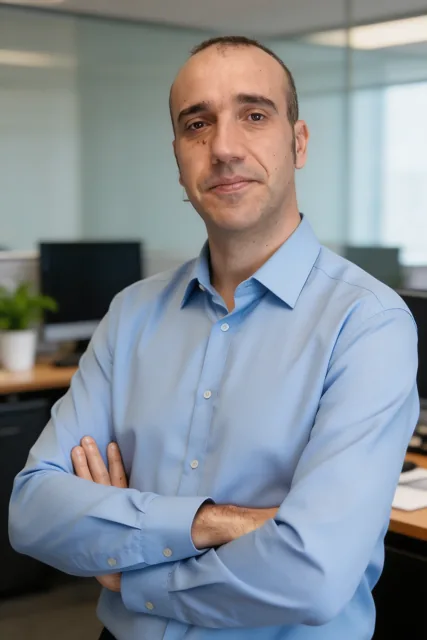

The new search and AI systems interpret, rewrite and spread narratives that can strengthen or undermine a brand’s identity far beyond the boundaries of a website
SEO is no longer just a matter of keywords or links: with the arrival of AI Overviews, intelligent assistants and language models, the way a brand is perceived online increasingly depends on how machines interpret data, signals and relationships. It is a shift that redefines not only visibility, but also the trust and credibility of businesses.
For this reason, entrepreneurs and marketers cannot limit themselves to updating their websites or chasing the latest algorithm. They need to understand how the new mechanisms that turn content into narratives actually work, and how those narratives can strengthen or weaken a brand.
That is what we are talking about today on SEO Confidential, our column dedicated to analysis and interviews with the leading figures of international SEO. The guest of this edition is Jono Alderson, a world-renowned, award-winning SEO expert and a global reference point for digital strategy, performance and structured data.
Having worked with startups, agencies and major brands, Jono brings a clear vision: today the competition is no longer played out only on web pages, but across the entire ecosystem of signals that machines and people associate with a company.
With him we discussed digital reputation, how AI systems create or distort stories about brands, and which strategies can help turn SEO from a mere technique into a tool for building authority.
The result is an interview that challenges many assumptions and shows how SEO, in the AI era, is not a craft for those looking for shortcuts, but for those who can build solid, lasting stories that stick in readers’ minds.
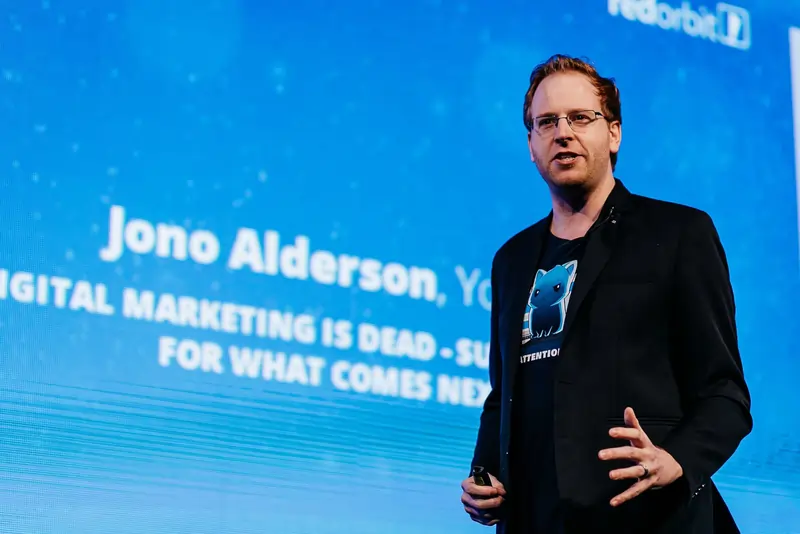
“The irony is that when you stop chasing links, you usually end up earning stronger ones”, Jono told us
Jono, you write that online visibility today depends not only on how a company communicates in the markets where it sells, but also on content and conversations that emerge in distant languages and countries. And to deal with that, translating a website or adding technical tags is not enough.
In practice: a Japanese forum, a Spanish review or a Polish blog can influence a brand’s reputation even in Italy or the United States. For an entrepreneur aiming to generate sales and conversions, what does this phenomenon mean? What risks does it carry, and what opportunities can it offer?
It means you may have lost control of the narrative without even knowing it. Your brand is not defined by what you say in your press releases or on your .com site, but by the fragments, reviews and half-truths that pile up across the web.
A review on a Spanish travel site could end up shaping how American tourists see you, because Google, TikTok or an AI agent picked it up and surfaced it in a completely different context.
The risk is obvious: a story you have never seen, in a language you do not speak, could become the story that defines you. But there is also an opportunity: you can deliberately seed content and conversations outside your “home markets” to build resilience and broaden how machines – and therefore people – perceive you. The problem is that most entrepreneurs do not even notice these international ripple effects until it is too late.
You talk about “localisation for machines” rather than for customers. Can you explain what you mean? And above all: how should an entrepreneur decide how much to invest in content designed for real customers and how much in content created to influence the search and AI systems that shape purchasing decisions?
Traditional localisation means translating your site into Italian because you want to sell to Italians. But machines do not care about your target markets: they consume, compress and remix signals from every corner of the world.
So “localisation for machines” is about shaping their understanding, not just meeting human needs. It is not a question of budget allocation, but of recognising that content designed for customers and content designed for machines serve different purposes.
If you write only for customers, you leave gaps that competitors – or even unknown bloggers on the other side of the world – will end up filling for you. If you write only for machines, you risk sounding robotic and losing people. The real challenge is balance: making sure that both flesh-and-blood users and AIs find consistent, contextualised and credible information about you.
Jono, today AI systems do not just return facts, they build narratives that can strengthen or damage a brand’s reputation. How does this affect the choices of an entrepreneur aiming to generate trust and sales?
It means you are no longer competing only on product features or customer experience, but above all on the story that gets told. AI systems do not merely report facts: they interpret them.
If an AI assistant describes your company as “controversial” or consistently places it behind a competitor, that perception tends to become reality. For businesses it is not easy either to counter these narratives or to buy space to change them.
That is why it is essential to constantly feed the ecosystem with consistent, credible and even “boring” information. Only then, when machines tell your story, will they help build trust instead of eroding it.
Machine memory tends to compress and repeat only the “strongest” details of a story, even years later. How can you prevent an old negative episode from continuing to shape a company’s image?
You can’t. At least, not entirely. Machine memory is ruthless: it compresses and amplifies whatever made an impression the first time. That embarrassing incident from 2017? It will keep resurfacing well into 2030, unless you drown it out with stronger, more persistent narratives.
The trick is not to try to erase the past, but to outgrow it. You cannot stop the machine from remembering, but you can shape what it remembers alongside it. You need to create new reference points, highlight the positive details and build a broad, coherent picture in which the negative episodes end up diluted.
What are the first concrete steps a business should take to positively steer the perception built by AI models and the new search systems?
The first is to stop thinking of the website as a “home base”: today it is just one node in a much wider network. Second: you need to check how you are represented out in the real world. I am thinking of reviews, forums, structured data, Wikipedia, product listings, regulatory documents.
From there comes the third step, which is to tidy things up and ensure consistency across the different sources, so that the information is connected and mutually reinforcing. Finally, you need to build “bridges”: relationships, citations and schemas that associate the brand with the entities, concepts and contexts it wants to be identified with.
The ultimate goal is not to produce more content, but to improve the quality of the signals that feed the narrative.
If links are not numbers to accumulate but relationships of trust and context, how does the strategy for building online authority change for an entrepreneur?
It changes everything. If you still treat links as a points system, you are playing a game that ended years ago. Today a link is a trace in a story: it tells machines how entities relate, who trusts whom, and which context matters.
For entrepreneurs, this means that buying, begging for or swapping links is useless at best and harmful at worst. You do not need “more links”. You need the right connections, in the right contexts, that make sense to both humans and machines.
Many people still talk about link building as accumulating backlinks, but today what matters more is building authentic relationships and contextual connections, don’t you think? How can an entrepreneur turn their link building strategy into relationship work that genuinely strengthens authority and trust online?
Entrepreneurs who understand this stop thinking about “SEO” in the narrow sense altogether. They stop trying to “build links” and start asking themselves: who do we need to reach? Which communities, platforms and entities do we want to be associated with?
Then they earn, nurture and maintain those relationships, not because they get a link, but because those relationships make them visible, credible and connected within the networks that matter to search engines and AI agents. The irony is that when you stop chasing links, you usually end up earning stronger ones.
Some entrepreneurs believe that if their website stays the same, its performance should not get worse. Why is this belief dangerous, and how should it be overcome?
The web is not a static environment. A website does not live in isolation, it competes in an ecosystem that is constantly changing. Browsers evolve, networks transform, competitors improve. What was “acceptable” in 2020 looks slow, clunky and embarrassing in 2025.
Standing still means falling behind. And there is more: machines notice. They do not compare a site with its own history, but with a moving average. That is why, if you are not actively improving, you are starting to degrade.
Nowadays it is no longer pages that count, but the claims that systems extract and connect. In concrete terms, how do Google’s Knowledge Graph and LLMs interpret these claims, and what must a company do to make them clear and credible in the eyes of machines?
Google’s Knowledge Graph and language models do not “read” pages the way a person would. They extract claims, data and relationships, then determine whether they are credible and how they connect to the wider network. If your content is vague, inconsistent or poorly structured, that information may never be extracted, or may not stick.
The goal is not to publish more pages, but to ensure that the information you want associated with your brand is clear, verifiable and supported by external sources.
For AI systems, what a company writes about itself on its homepage is not decisive. What really matters is cross-confirmation: if multiple independent sources report the same information – the founding year, for example – it becomes credible and stable in their “memory”.
You say that trust is not built through the quantity of content but through the consistency and connectedness of information. How can an entrepreneur make sure their messages are recognised and reinforced by both the Knowledge Graph and LLMs, so that they truly impact visibility and sales?
You can think of all this as choreography. It is not about shouting into the void, but about conducting an orchestra of signals ranging from your website to schemas, from press coverage to reviews, from regulatory filings to product data. Consistency across these sources is what makes machines trust you.
Inconsistency, on the other hand, is poison: if one source lists Jane as CEO and another John, machines hesitate and your authority collapses. Those who want to stand out must build connected, credible information ecosystems in which every signal reinforces the others. That is how you go from being “one brand among many” to becoming “the default answer”.
From the SERP to the story: when AIs are the ones telling your brand’s tale
The interview with Jono Alderson leaves a clear message: it is no longer enough to watch over your pages, you need to watch over your stories. AI systems do not report faithfully, they interpret. And those interpretations determine whether a brand becomes trustworthy or disappears off the radar.
The point is not to accumulate content or links, but to build a digital identity that withstands machine summaries and AI syntheses. For business owners, this means staking everything on credibility: if the signals are solid and consistent, trust grows stronger; if they are fragile, it crumbles.
It is a transformation that radically changes the very concept of SEO. It is no longer a set of techniques for climbing a ranking, but reputation work that lives on consistency, recognisability and reliability.
Brands that manage to establish themselves as credible, verifiable sources will become the references machines draw on when they need to produce answers. The others, even if technically optimised, risk being compressed, paraphrased or ignored.
This shift in power forces you to look far ahead: tactical fixes are no longer enough, you need a strategy that brings together communication, relationships and digital signals. In an ecosystem where AI decides what to amplify and what to ignore, every misalignment becomes a weak point, every contradiction undermines your credibility.
The message is unequivocal: the SEO of the future is your reputation. There is no separation between technical optimisation and brand authority, because both work towards the same goal: getting you recognised as a trustworthy source, by machines and by people.
Our thanks to Jono Alderson for sharing such a lucid, practical vision of this new balance between SEO, brand and reputation. See you next time: the journey into the future of search has only just begun!
#avantitutta