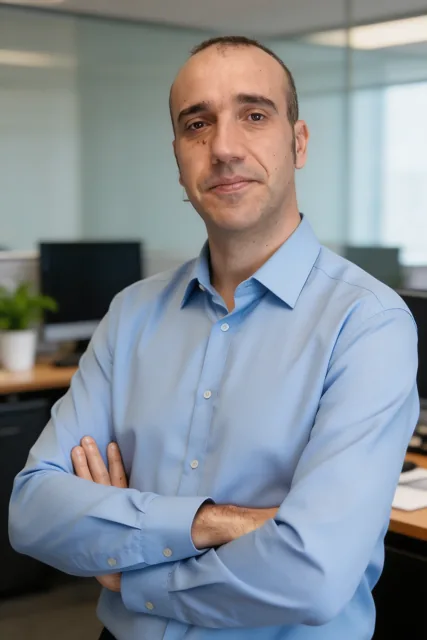

According to Pete, Brand Authority will become even more relevant in the world of AI Overviews, and LLMs will inevitably have to provide more transparent metrics
The world of online search is at the epicenter of an earthquake called Artificial Intelligence. The arrival of AI Overviews and the dawn of a “zero-click” era are shattering certainties and business models, leaving many entrepreneurs with one fundamental question: what now?
After our conversation with Patrick Stox of Ahrefs, we have the privilege of interviewing, for our SEO Confidential series, Pete Meyers of Moz, better known as Dr. Pete.
As Marketing Scientist and creator of MozCast – the “weather report” that tracks Google’s algorithmic storms – Meyers is not just an analyst, but a true historian of SERP changes.
Together we tackled the most pressing questions: is Brand Authority really cannibalizing expertise? How do you survive a future with fewer clicks, where being cited by AI is the new ranking?
With his unmistakable blend of clarity, pragmatism, and sharp wit, Pete Meyers guides us past the panic of the “traffic apocalypse”, revealing an uncomfortable truth: we are in the middle of a renegotiation of the pact between those who create content and those who distribute it. A power struggle that will decide the future of the web.
Forget predictions: what Pete Meyers told us is already reality. Scroll down and judge for yourself.
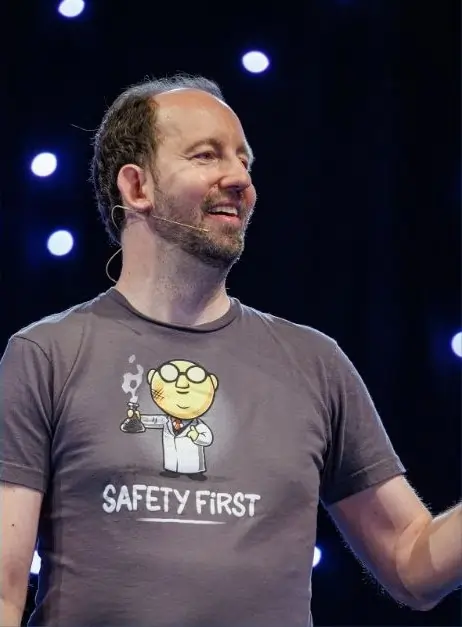
“LLMs are absorbing a huge portion of the web and I’m not sure we can really optimize for them, at least not in the way we’re used to…”, Pete Meyers told us
Your work at Moz has highlighted the growing importance of Brand Authority, a metric that tries to turn the abstract concept of “fame” into concrete data.
Are we witnessing a situation where “Brand Authority” is effectively cannibalizing topical expertise and the E-E-A-T principles that Google itself has promoted for years? Or are these aspects not actually in conflict with each other?
Ultimately, Google is trying to model the world, and brands have enormous influence in the world, for better or worse. In a perfect world, people search for a brand because they believe it does something useful or produces a high-quality product or service, but as marketers we know it’s not that simple.
At worst, brands have an incentive to protect their reputation and project expertise, authoritativeness, and trust. Of course, as we saw with the site reputation abuse update, sometimes big brands cross the line. It’s a delicate balance, but I don’t think the influence of brands is going away.
With AI Overviews and AI Mode delivering direct answers, many business owners fear a “traffic apocalypse”. The mantra seems to be shifting from “driving clicks to the site” to “being visible in the AI answer”.
In your view, should companies resign themselves to a future with less organic traffic and focus on a new, almost “zero-click” form of marketing, where the goal is brand visibility and “memorability” directly in the SERP, as if it were a billboard?
I think we should always be building brands and practicing well-rounded marketing: having a single source of leads is dangerous, whatever that source may be. I don’t think even Google knows where we’re headed, so all I can say is that it will take time.
AI Mode is expensive and imperfect, and it doesn’t fit every situation equally well. Google also wants to protect its commercial results at all costs. I think search marketers will need to figure out which queries and search intents make the most sense for us and adapt.
If being cited by an LLM is the new “ranking #1”, what’s the concrete strategy? Beyond technical optimization, how can a business owner actively work to ensure their company, products, and experts are cited positively and accurately by AI?
Are we entering an era where our job is to “train” language models to recognize us as authorities?
LLMs are absorbing a huge portion of the web and I’m not sure we can really optimize for them, at least not in the way we’re used to. We need to think about the contexts our brands appear in and consider the entire search journey, which we should have been doing years ago.
Can a high Brand Authority score be considered an indicator of success and resilience in a world dominated by AI Overviews, or is it just one piece of a much more complex puzzle?
“Build a brand” is good advice, but honestly it’s not very practical. I think a metric like Brand Authority helps us quantify something we couldn’t quantify before, and lets us understand changes over time, how we stack up against the competition, what other companies are doing well and doing badly, and so on.
The main strength of this metric is that it makes visible something that used to be invisible. I suspect Brand Authority will be even more relevant in the world of AI Overviews, but you’re right, it’s definitely just one piece of a complex puzzle.
One of the biggest frustrations for marketers is the total lack of data from Google about AIOs. How can we measure success inside this “black box”?
Are we abandoning historical KPIs like traffic and clicks in favor of metrics such as growth in branded searches and… what else? What new performance indicators should business owners be tracking?
We’re all learning as we go. Brand mentions and visibility are the natural starting point, but attributing sales based on brand visibility is much harder than with clicks to a website.
I think LLM tools will have some incentive to prove their value by pushing more metrics and transparency, but I don’t think any of us knows what our analytics will look like in five years.
It seems SEO is no longer just about optimizing a website, but about managing an entity’s reputation across multiple platforms (YouTube, forums, podcasts) to influence AI.
From your perspective, what will SEO look like in the future? Will it be more like a “Brand Reputation Manager for algorithms” rather than a technician dealing with tags and links?
I think in a sense we need to treat the AI as the consumer. Good SEOs figured out years ago that being indexed and ranked isn’t enough. User intent and journey stage, brand awareness, and trust have always mattered.
With the rise of AI Overviews and AI Mode, many traditional metrics seem to be wobbling. “Ranking” is becoming “being cited”, and “traffic” is an increasingly scarce resource.
My question is almost existential: how is Moz approaching this with its core tools? Are you adapting your tools or building something radically new for a world where success is no longer measured in clicks, but in mentions and visibility?
For now, all I can say is that we’re trying to see it through a familiar frame. In other words, a brand mention at the top of an AIO answer or in ChatGPT is a bit like a high ranking, while one at the bottom is a bit like a low ranking. So we start from what we know, measure it, and then learn how it affects success.
Looking at the current state of search, between AI-generated spam, algorithmic upheavals, and the immense power of a few big players, are we facing a new “Geek Enlightenment”, as you call it, or are we just wandering in the dark, at risk of being cast out of the new Olympus that Google and AI are building, to borrow a metaphor dear to you?
I believe there’s a very real danger: the fundamental balance between those who create content and those who distribute it – between the “gods” and the humans, to stay within my metaphor – is cracking. Until now, Google has benefited from our content while offering visibility, traffic, and economic opportunity in return.
But if that implicit pact breaks down, what will still drive us to produce quality content? And if we stop feeding the AI language models, what future do they have? The big content producers have understood this, and in fact they’re already reacting, including with lawsuits.
In the coming years we will witness a genuine power struggle. And the future of the web will depend on how the roles are redrawn in this new ecosystem.
Being online is no longer enough: if your brand isn’t mentioned by AI, it doesn’t exist
What emerges from this interview with Pete Meyers is simple, yet powerful: we’re not just losing clicks, we’re losing control.
The era when ranking first on Google was enough to generate traffic is over. AI Overviews and LLMs – like the ones behind ChatGPT – read the web, synthesize it, and deliver direct answers.
If your brand isn’t mentioned there, it’s as if it doesn’t exist.
SEO is shedding its skin. Today, winning means building a recognizable, citable, authoritative brand, one capable of showing up in the AI’s “answer”, not just in the search results. And that requires strategy, consistency, visibility across multiple channels, and an online presence that leaves a mark.
We can no longer limit ourselves to “optimizing for Google”. We need to teach LLMs to know us, recognize us, and cite us. Because this is how the new visibility is measured: you’re either in the AI’s answer, or you’re not.
We thank Pete for his time and his valuable insights.
See you soon with the next guest of SEO Confidential.
Spoiler? No, but trust us: it will be a great surprise.
#fullsteamahead